
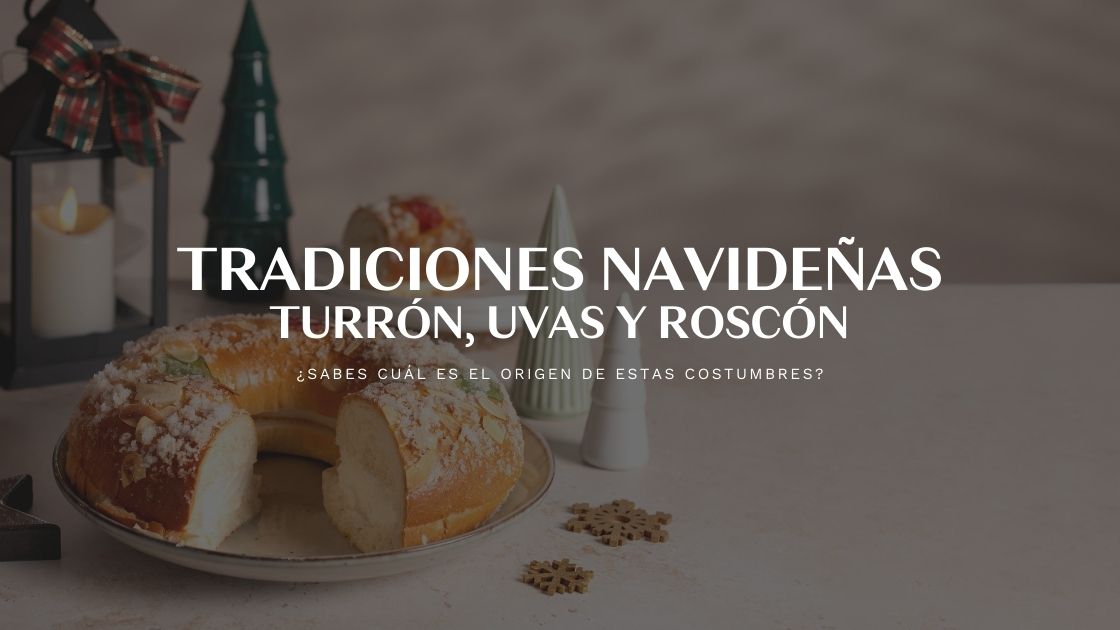
In Spain, Christmas simply wouldn’t be the same without certain flavours. There are rituals we repeat year after year almost without thinking: breaking the nougat, counting grapes one by one, or hunting for the hidden bean inside the roscón. But have you ever wondered where these traditions come from?
At Turia Hotels, we love taking care of the small details that make every stay special. And December is the perfect time to rediscover what connects us, what makes us feel at home… even when we’re travelling.
Today, we’re sharing the origins of three Christmas traditions that are found on almost every Spanish table: nougat, lucky grapes and the Three Kings’ roscón.
🍯 Nougat: a sweet with centuries of history
Nougat is probably Spain’s most iconic Christmas sweet. Its origins go back to the Arab period, when desserts made with honey, almonds and egg white were already common. It appears in Valencian documents as early as the 15th century — and it’s been part of our Christmas tables ever since.
The most traditional varieties are Jijona (soft) and Alicante (hard), although today you’ll find versions for every taste: chocolate, toasted egg yolk, coconut, truffle… What never changes is its starring role after Christmas meals.
💡 Did you know that at Hotel Turia Valencia you can enjoy nougat as part of our Christmas breakfast details? A sweet nod to our roots.
🍇 The 12 lucky grapes: a tradition born from a clever idea
Eating 12 grapes at midnight on New Year’s Eve — one for each chime — is one of Spain’s best-known traditions. But it’s not as old as you might think.
At the beginning of the 20th century, grape producers in eastern Spain faced an overproduction problem and launched a campaign to promote this new custom. It worked. Today, millions of people follow the ritual with excitement, superstition… and a few laughs when a grape goes down the wrong way.
If you’re staying with us in Valencia, Granada or Badajoz on New Year’s Eve, don’t worry — we’ll make sure you have your 12 grapes ready to start the year on the right foot.
👑 Roscón de Reyes: crowns, beans and surprises
The roscón de Reyes marks the end of Christmas — and it’s also one of the most eagerly awaited treats. It’s eaten on 6 January, the day of the Three Kings, and its circular shape symbolises eternity and the cycle of life.
Inside the roscón you’ll find two surprises: a small king figurine and a dried bean. Tradition says that whoever finds the figurine gets crowned… while whoever finds the bean pays for the roscón!
Although today it’s usually filled with cream and decorated with candied fruit, its origins lie in ancient Roman pagan celebrations. As you can see, what feels deeply ours actually comes from far away.
🧡 Traditions that bring us together… even when you’re away from home
At Turia Hotels, we love sharing who we are. That’s why during the festive season you’ll find small details that connect with these traditions: seasonal décor, nougat at breakfast, roscón on the buffet and, above all, a warm atmosphere to enjoy with whoever you choose.
Whether you’re travelling for pleasure or spending Christmas away from home for work, we want you to feel that you can celebrate Christmas your way here too.
🎁 Visiting Valencia, Granada or Badajoz in December?
Discover the cities — but also their flavours, their stories… and that feeling of home that doesn’t depend on dates.